Top new agentic IDEs
The best AI-powered coding environments that go beyond autocomplete. Autonomous agents that edit, run, and iterate on code.
Agentic IDEs (ADEs) gained crazy popularity in 2026. More developers are switching to the new, agentic way of building.
Today's ADE is usually a desktop app that optimises coding with agents:
- Multiple parallel chats on multiple projects
- Git worktrees for isolated changes
- Switch between different local agents (Codex, Claude Code, OpenCode etc.)
- Running tasks in remote environments (cloud VMs, sandboxes or your own server), so agents keep working after you close the laptop
- Team collaboration: shared sessions, live links and agents your teammates can steer too
- Task management: boards, tickets from Linear, GitHub or Slack, and lead agents that split work between subagents
- Focused on code review, diffs and pull requests
Below are the top agentic IDEs that are popular and useful today.
Capy 🏆
Cloud-first ADE from Scrapybara (YC F24). Every thread runs on its own cloud VM with your repos cloned, so agents keep working after you close the laptop. The desktop app (macOS, Windows, Linux) can also run threads in a local folder or on your own server. A long-lived Captain agent plans the work and starts subagents, and each one can open its own PR. Capy then fixes failing CI, resolves merge conflicts and handles review comments until the PR is ready to merge.
Runs Claude, GPT, Gemini and Grok models: bring your ChatGPT, Copilot or SuperGrok subscription, or your own API keys. Works from Slack and Linear, and a review agent posts inline comments on GitHub PRs. Closed source. From $20/mo, with credits paying for machine time: up to 8 cloud machines at once on the cheapest plan, 64 on Max. Features, pricing and setup, with screenshots, are in our Capy guide.
Open-source ADE from Theo (JavaScript youtuber) and his team. Used by 3,000 devs. Packaged by default in Omarchy. Inspired by the Codex app UI but built to be flexible to work with any agent (Claude Code, Codex, Cursor, OpenCode) and open source. Supports working off local branch or worktrees. The largest open-source project. Features, remote access and setup are in our T3 Code guide.
Paradev (formerly Superset)
Superset renamed itself Paradev in October 2026, together with an $11.5M seed round led by Union Square Ventures. Same app underneath: works with any CLI-based agent (Claude Code, Codex, OpenCode, Cursor Agent, Gemini, Devin, Kiro) and runs them in parallel, each task in its own worktree and branch. Unlike Conductor, you can also work off your main branch directly. Built-in browser, file tree, terminal multiplexing, diff review and one-click PRs. Performance has been consistently solid.
New since the rename: automations on events or a schedule, Slack and Linear integrations, remote hosts, an iOS app and cloud workspaces in early access. MIT licensed, 16k+ GitHub stars. Free, with paid plans from $20/user/mo for teams and cloud hours. macOS first, the Linux build is experimental, no Windows yet.
Probably the best UX of any ADE right now. Opinionated, beautiful, easiest for non-technical users to pick up. Built primarily around Claude Code (Codex added later). Great Git integration: one-click PRs, inline CI/CD checks, AI code review comments you can drop straight into chat. Main downside is performance. The UI starts to lag after 15-20 minutes of heavy agent use. Codex integration is also more basic than Claude Code. Closed source.
Update, November 2026: Meta acquired Conductor on November 4, and its founders are joining Meta Superintelligence Labs. Conductor Cloud goes read-only on November 13 and shuts down on November 20. The local app gets new models and critical bug fixes only until early 2027, so expect it to be shut down too. Fine to keep using for now, but don't build your team's workflow around it.
The fastest-growing ADE of 2026: first commit in March, 43k+ GitHub stars by August. Runs Claude Code, Codex, Gemini, Cursor CLI, Copilot and 20+ other CLI agents in parallel, each in its own worktree with its own browser tab. GPU-rendered terminal with unlimited splits, embedded Chromium with a design mode for pointing agents at UI, inline diff comments that go straight back to the agent. GitHub and Linear integration, SSH for remote machines, and iOS/Android companion apps to check on agents. Free and MIT licensed. Closest open-source rival to Paradev.
Open-source app for running coding agents in parallel on your own machines and checking on them from anywhere. Desktop app for macOS, Windows and Linux, native iOS and Android apps, a web app, and a headless daemon for servers. Runs Claude Code, Codex, OpenCode, Pi, Antigravity and 30+ more agents through ACP on your own subscriptions, each optionally in its own worktree.
Remote access goes through an end-to-end encrypted relay or your own tunnel, and voice input is transcribed locally. 400+ community plugins, plus a CLI and a TypeScript SDK. Paseo Hub adds GitHub, Slack and Discord triggers that start agents on your machines. Apache 2.0, \~24k GitHub stars, built by 1 self-funded developer. The app is free; managed Hub Pro is $15/seat/mo.
Tmux for coding agents. Not a desktop app but a single Rust binary that runs inside the terminal you already use and gives every agent its own real terminal pane. Detects 22+ agent CLIs out of the box (Claude Code, Codex, OpenCode, Pi, Cursor, Copilot, Grok) and shows which ones are working, blocked on your input or done.
Sessions live on a background server, so agents keep going when you close the laptop and you can reattach from any machine over SSH. Agents can drive Herdr themselves through its CLI and socket API: split panes, start other agents and prompt each other. Open source, 40k+ GitHub stars. The pick if you live in the terminal and don't want another Electron app. Setup, keybindings and workflows are in our Herdr guide.
Coding agent from the Sourcegraph team, spun out as its own company in December 2025. Unlike most tools here, Amp ships its own agent instead of wrapping Claude Code or Codex, and picks frontier models from several labs for you: you only set the effort level, from low to ultra.
Since June 2026 every thread can run in an Orb, a cloud sandbox with no worktrees and no port conflicts, and Portals give you a live preview of the running app. Self-hosted orbs arrived in October. Automations start threads from Linear issues, failing CI or a schedule, and threads are multiplayer. CLI, desktop, web and mobile apps; the editor extension was retired in February 2026. Closed source. Free with your own keys and compute, $20/mo for hosted orbs and credits.
Multiplayer app for coding with agents from Zed Industries, the team behind the Zed editor. Built on DeltaDB, version control that saves every edit together with the conversation that produced it. Their bet is replacing pull requests: the team works in shared live threads, reviews happen in subthreads on duplicated worktrees, and comments stay anchored to their line as the code changes.
Cloud runners keep agents working after you close the laptop, and the agent can kick off your existing CI. Git-compatible, so the repo stays on GitHub. Ships its own agent on Claude, GPT and Gemini models, and a CLI syncs Claude Code sessions into Delta threads. Public beta since September 2026, on macOS, Windows, Linux and the web. Free with your own keys, Pro is $10/mo.
A lead agent plans the work and starts 1 worker per task, each in its own worktree. A board sorts sessions by status: working, needs you, in review, ready to merge. Failing CI, review comments and merge conflicts go back to the agent that owns the branch, and a reviewer agent can read every PR. Each worker gets a browser to test its app.
Runs 38 agent CLIs (Claude Code, Codex, Cursor, Gemini CLI, Aider, Amp, OpenCode), and you can pick a different one for the orchestrator, the workers and the reviewer. Desktop app, CLI, and phone apps paired by QR code. Apache 2.0, 14k+ GitHub stars. Free for unlimited local agents, cloud sandboxes from $20/mo.
Started as a plan-first extension for VS Code and Cursor: describe the task, get a spec, hand it to your agent. In July 2026 it became an open-source desktop app that runs 19 coding agents (Claude Code, Codex, Cursor, OpenCode, Copilot, Amp, Devin, Kiro, Droid and more) in parallel worktrees.
All agents share the same specs, tickets and history, so you can switch models mid-conversation without losing context, or have agents debate, review each other's work and hand off tasks. Built-in skills for planning, review and splitting work into tickets, plus multiplayer team workspaces. MIT licensed. macOS, Windows, Linux and mobile. Free for individuals, teams from $16/user/mo.
Open-source ADE from YC W26. Runs Claude Code, Codex, OpenCode, Amp, Droid, Copilot and more in parallel worktrees. Its standout feature is issue intake: pull a ticket from Linear, GitHub, Jira, GitLab or Asana and hand it straight to an agent. Works over SSH on your own remote machines. Local-first: app state lives in SQLite on your machine and code never goes to Emdash servers.
Open-source ADE with its own agentic harness rather than wrapping the native CLIs from Anthropic or OpenAI. Supports any model: Google, OpenRouter, Val AI Gateway. Has a local server that lets you remote in from your phone. Built-in LSP and plugin support. The tradeoff is you're not using the native harnesses that models are trained on.
Background coding agents in the cloud, from a team that used to run managed Postgres and pivoted in 2025. Hand it an issue or a Sentry or PagerDuty alert and get a PR back, including PRs that span several repos. Reviewer comments turn into new revisions. Each task runs on a cloud machine with a terminal, files and a live desktop, plus public preview links.
Runs Claude Code, Codex, Cursor, Amp, OpenCode and Pi, and MAX mode runs several of them side by side so you pick the best result. Integrates with GitHub, GitLab, Bitbucket, Linear, Jira and Slack. SOC 2, SSO and self-hosted options for bigger teams. Web, desktop, CLI and mobile. Closed source. 7-day trial, then from $60/mo with usage included.
Background coding agents from YC (Spring 2026). Every task gets its own Linux machine, where the agent installs dependencies, starts databases and services, and checks its own work before opening a PR. It can drive a browser or desktop and send back screenshots, recordings and preview links.
Start tasks from Slack, Linear, GitHub (PR reviews, CI failures), GitLab, schedules, webhooks or the API. Runs Claude Code, Codex, Cursor, OpenCode and Pi on your own credentials, and shows usage by person, agent and model. Closed source. $100 of free usage, then from $50/mo.
Cloud ADE from YC (Fall 2026), built by early Gem team members. Every agent gets its own Linux cloud computer, a devbox. An agent copies your local setup into the cloud once, then every thread forks from a snapshot: no git worktrees, no port conflicts. Idle boxes sleep and aren't billed.
Runs the native Claude Code and Codex harnesses on your own subscription. Preview URLs, triggers from Slack, Linear, cron or the API, live session sharing, and SSH from VS Code or JetBrains. Mac desktop app, mobile apps, CLI and web. Closed source. Free trial with 20 box-hours, then from $19/mo.
Cloud agents from YC (Summer 2026) with a focus on QA: agents check their work in browser-driven previews before opening a PR, then follow it on GitHub. Onboarding moves your local sessions, memories and MCP servers to the cloud. Start tasks from Slack, Linear, Sentry or even iMessage.
Its own harness works with your Claude, ChatGPT or Grok plan and open-weight models like Kimi and GLM. A Mac app also runs Claude Code and Codex locally, in a folder or a worktree. ACP support (works from Zed and Paseo), API, webhooks and MCP server. Web, macOS, iOS and CLI. Closed source. Free with 5 concurrent sessions, Team is $60/seat/mo.
From Prasanna Sankar, Rippling co-founder and former CTO (YC F26, $15M seed). Cloud agents that cover the whole cycle: plan, build, test, review, merge. Each session gets its own cloud machine with your full stack, and a model from a different lab critiques the plans and diffs. Browser test agents record real user flows and attach them to the PR, native mobile tests run on a cloud phone, and every branch gets a live preview URL. PR risk scoring, auto-fix commits and a merge queue.
Version 2.0 adds AutoBots: always-on agents in Slack for on-call triage, CI fixes, security review and docs, each with its own budget. Routes work to Claude, GPT, Gemini or open models, with your keys, your Claude or Codex plan, or Vorflux-billed tokens. Web, Mac, iOS and Android. Closed source. Usage-based: machines from $0.21/hr, tokens at cost, $70 of free credits to start.
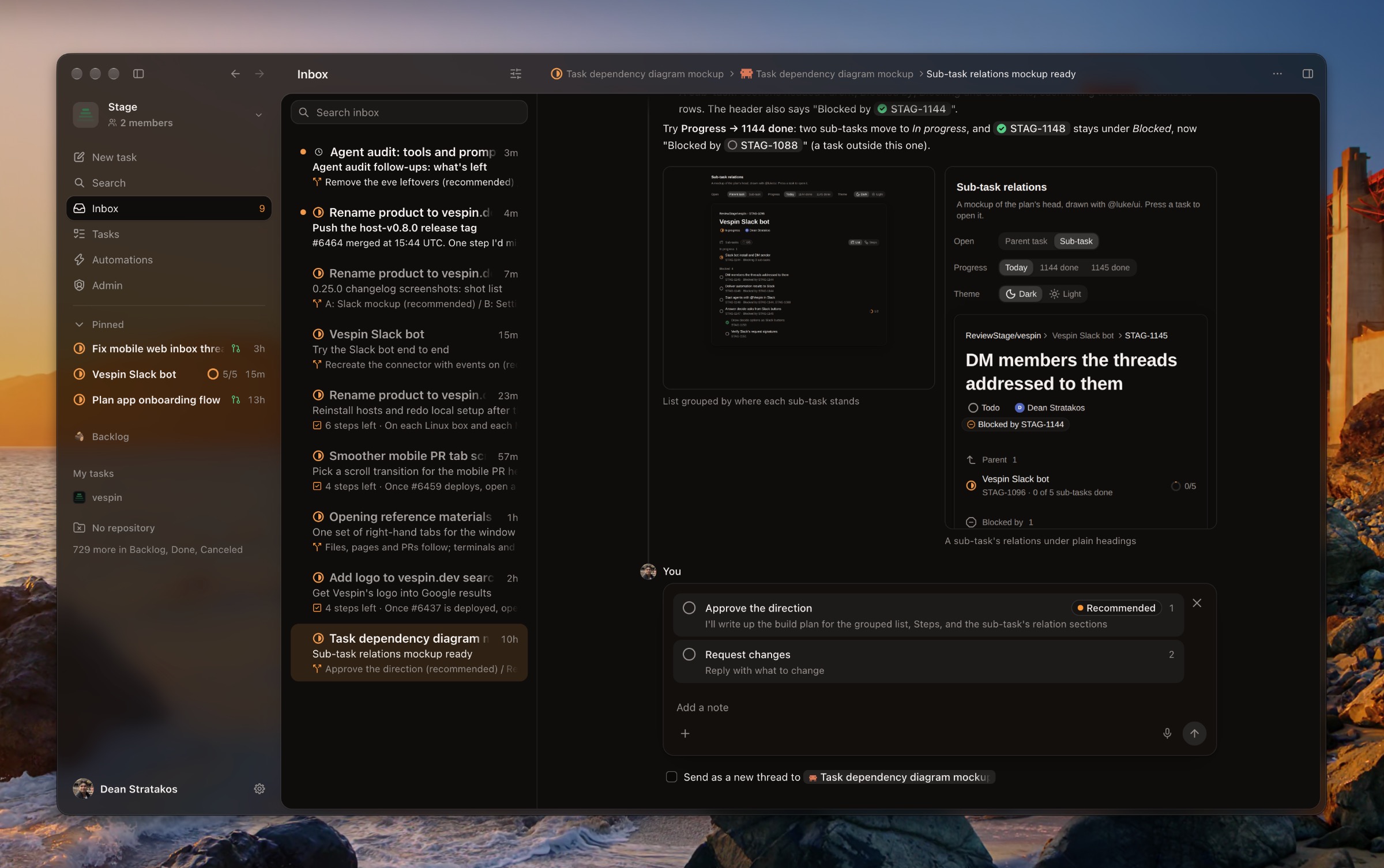
"An inbox for all your coding agents." Run many agents in the cloud or on your own machines, and they only post to your inbox when they need a decision, an approval or a review. Agents create tasks and sub-tasks, start other agents, message each other, open PRs and fix failing checks. You review PRs in the app with the diff split into chapters.
Automations on schedules, GitHub or Sentry events and webhooks, plus Slack, a CLI and an MCP server. Runs Claude Code or Codex on your plan or API key, and can chain several plans so the next one takes over when you hit a limit. From Stage (YC P26), renamed from Luke in November 2026, with near-daily releases. Mac app and a web app that works on phones. Apache 2.0, free.
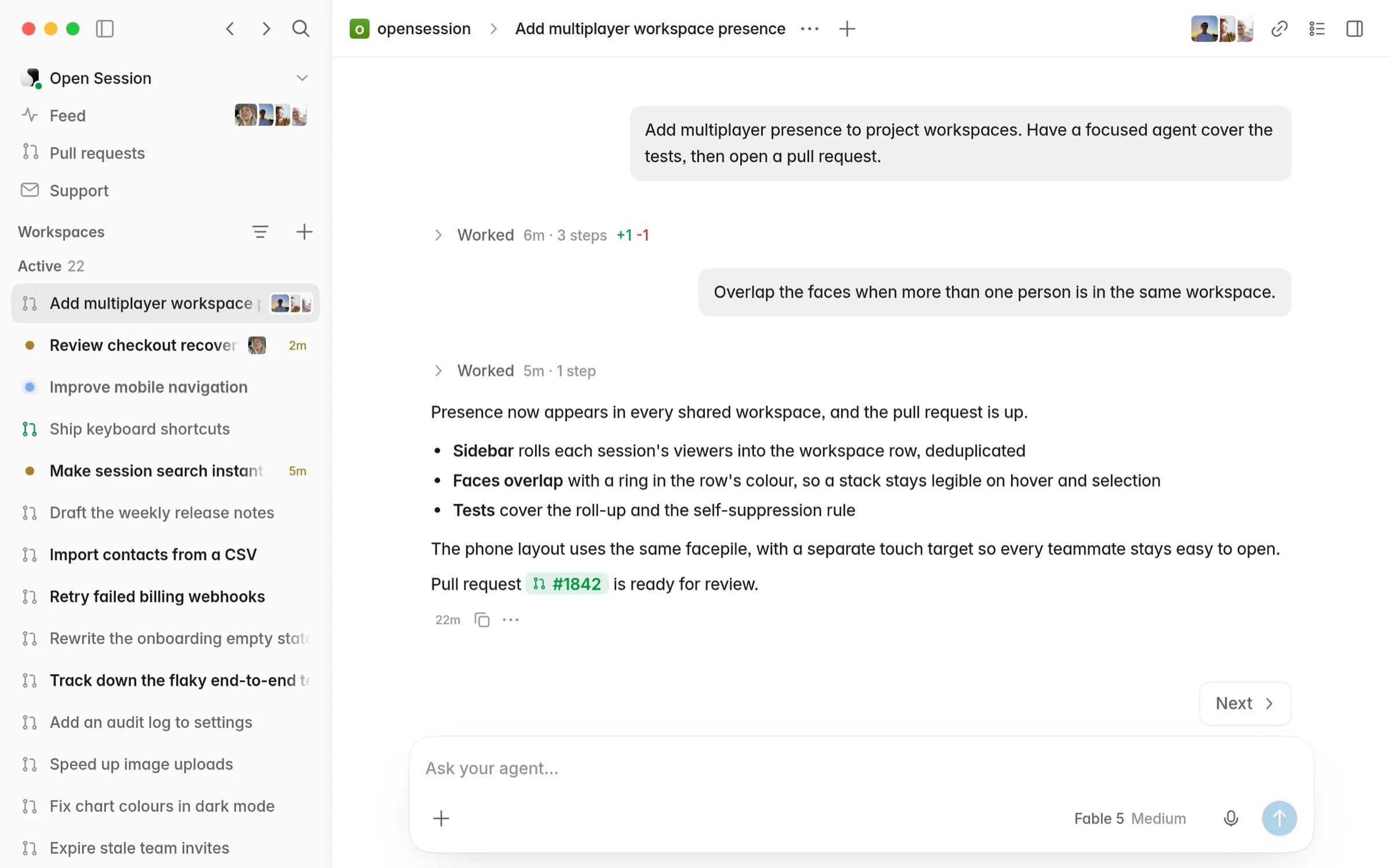
Self-hosted agent server from Tella, the screen-recording company, which says 80% of the code it shipped since July came out of Open Session. Run it on your own machine and use it from the web, your phone, a Mac app or a Chrome extension.
Every session gets its own worktree and ends in a PR, with the diff and review next to the transcript. Share sessions as live links, run sub-agents, automations and recurring reports, and put agents into Slack, Linear and GitHub. Optional sandboxes on Daytona. Runs on the open-source Pi harness with your Claude and Codex subscriptions or API keys, not the native CLIs. MIT licensed, free.
Team workspace for agents from Zeabur. Run Claude Code or Codex on your own plan on your laptop, a remote box or Nuphos Cloud, and move sessions between them. Teammates can join a live session and steer it together, and split panes let you watch several at once. Schedule and webhook triggers, agents in Slack and Discord, shared team memory and skills, built-in views for Kubernetes, Grafana, GitHub and Linear.
Leans more towards DevOps than code review: no worktrees and no CI loop. Open source (Apache 2.0) and self-hostable since October 2026. Desktop app for macOS, Windows and Linux, plus phone apps. Heads-up: Zeabur is closing its hosting business by the end of 2026 after two security breaches. Nuphos isn't part of that announcement, but keep an eye on it.
Amazon's agentic IDE built on VS Code. Spec-driven development: you describe what you want, Kiro generates a detailed spec, then the agent implements it step by step. Structured planning and hooks for automated tasks.
A traditional IDE rethought for the AI age. High-performance code editor built from scratch in Rust. Built-in AI assistant with inline edits, multi-model chat, and agentic capabilities. Not a full ADE with worktrees and parallel agents, but a solid option if you want a proper editor that's AI-native from the ground up. For multiplayer agent work, the same team builds Delta.
ADE built by JetBrains, the OG company behind many quality IDE and dev products. Air designed for orchestrating multiple AI agents concurrently. Supports Codex, Claude Agent, Gemini CLI, and Junie out of the box. You can mention a specific line, commit, class, or method when defining a task so the agent gets precise context. Run agents locally or isolate them in Docker containers and Git worktrees. Bundles terminals, Git, previews, and code navigation into one workspace. Free download for macOS, Windows and Linux coming soon.
Coding agent by ByteDance (TRAE). Built around interactive back-and-forth with the agent instead of fire-and-forget. Shows a to-do list of what's done and what's next, live diffs, and a context panel showing exactly which files and tools the agent is using. Two agents: Builder ships from zero to product fast, Coder does careful planning with sub-agents for deep work on existing codebases. Parallel multitasking across agents with zero context loss. Integrates databases, payment APIs, Figma directly in the workspace. Paid (from $3/mo). Free to try.
The mainstream ones
You already know these. They come from the model labs, the most popular AI editor and GitHub. All 4 are good, and each one keeps you on its own agent.
Anthropic's native desktop app for Claude Code. Simple UI, built-in connectors and skills that are easy to set up. Remote control sessions from your phone, SSH into remote servers, or spin up cloud environments that run even when your computer is off. They're shipping new features like crazy, sometimes multiple times a week.
OpenAI's native ADE for Codex models. Only OpenAI models, but those are arguably one of the best agentic coding models right now. Sub-agent support, skills/MCP marketplace, automations for scheduled tasks (like nightly code reviews), clean diff viewer. Cloud-sandboxed execution.
Cursor rebuilt its interface around agents in April 2026. The new Agents Window replaces the editor as the main screen and runs many agents in parallel across repos: locally, in worktrees, in cloud VMs or over SSH. The classic editor is still 1 click away, which makes it the easiest move for teams already on Cursor. Also ships Design Mode for UI tweaks and /multitask to split a queue of requests into parallel background agents. Closed source, only Cursor's own agent.
Google's ADE. Version 2.0 (Google I/O, May 2026) split the Agent Manager out of the IDE into a standalone desktop app for running local agents in parallel, with projects, worktree support, subagents, hooks and scheduled tasks. Strong at browser-driven work: a browser subagent tests the app and records walkthroughs of what it did. Reads AGENTS.md for project rules. Built around Gemini, and free during preview with generous limits.
GitHub's standalone desktop app, announced at Microsoft Build in June 2026. No editor, no file tree: it's a control center for agent sessions. Every session gets its own worktree, created and cleaned up for you. A "My Work" view pulls active sessions, issues, PRs and background automations into 1 place, and Agent Merge shepherds a PR through checks until it's mergeable. Local and cloud sandboxes. In technical preview for Copilot Pro, Pro+, Business and Enterprise users. The obvious pick if your team already runs on GitHub issues and Actions.
Quick picks
- Run any CLI agent in parallel, open source: Paradev, Orca, Paseo or Emdash
- A lead agent that splits the work and babysits every PR: Orchestrator or Capy
- Agents that keep running in the cloud after you close the laptop: Capy, Tembo, Replicas or Boxes
- Cloud agents that test their own work before the PR: Vorflux or Hoplite
- Agents that only bother you when they need a decision: Vespin
- Your team works on the same threads together: Delta or Nuphos
- Best polish on a Mac: Conductor, while it lasts (Meta bought it)
- You live in the terminal: Herdr
- Spec-first planning before code: Traycer or Kiro
- You're all-in on one model vendor: Claude Code Desktop, Codex Desktop or Antigravity
- Your team lives in GitHub: GitHub Copilot app
- You still want a full editor next to your agents: Cursor 3 or Zed
Comparison
| ADE | Agents | Open source | Platforms | Price |
|---|---|---|---|---|
| Claude, GPT, Gemini, Grok models | No | macOS, Windows, Linux, web | From $20/mo | |
| Codex, Claude Code | Yes | macOS, Windows, Linux | Free | |
| Paradev (ex-Superset) | Any CLI agent | Yes (MIT) | macOS, Linux (beta), iOS | Free, paid from $20/user |
| Claude Code, Codex | No | macOS | Free | |
| Orca | 27+ CLI agents | Yes (MIT) | macOS, Windows, Linux, mobile | Free |
| Paseo | 35+ agents via ACP | Yes (Apache) | macOS, Windows, Linux, mobile, web | Free, Hub from $15/seat |
| 22+ CLI agents (terminal) | Yes | macOS, Linux, Windows (beta) | Free | |
| Amp | Amp agent, multi-model | No | macOS, Windows, Linux, mobile, web | Free tier, from $20/mo |
| Delta | Delta agent, Claude Code sync | No | macOS, Windows, Linux, web | Free, Pro $10/mo |
| Orchestrator | 38 CLI agents | Yes (Apache) | macOS, Windows, Linux, mobile | Free, cloud from $20/mo |
| Traycer | 19 CLI agents | Yes (MIT) | macOS, Windows, Linux, mobile | Free, teams $16/user |
| Emdash | 20+ CLI agents | Yes | macOS, Windows, Linux | Free |
| Any model | Yes | macOS, Windows, Linux | Free | |
| Tembo | Claude Code, Codex, Cursor, Amp, more | No | Cloud, web, desktop, mobile | From $60/mo |
| Replicas | Claude Code, Codex, Cursor, OpenCode | No | Cloud, web | $100 free, from $50/mo |
| Boxes | Claude Code, Codex | No | Cloud, macOS, mobile, web | Trial, from $19/mo |
| Hoplite | Own harness, Claude Code, Codex | No | Cloud, macOS, iOS, web | Free tier, $60/seat |
| Vorflux | Claude, GPT, Gemini, open models | No | Cloud, macOS, mobile, web | Usage-based |
| Vespin | Claude Code, Codex | Yes (Apache) | macOS, web | Free |
| Open Session | Pi harness, Claude/Codex plans | Yes (MIT) | Self-hosted, web, macOS, iOS | Free |
| Nuphos | Claude Code, Codex | Yes (Apache) | macOS, Windows, Linux, mobile | Not published |
| Antigravity 2.0 | Gemini (plus Claude, GPT-OSS) | No | macOS, Windows, Linux | Free preview |
| Kiro | Kiro agent | No | macOS, Windows, Linux | Free tier, paid plans |
| Zed | Zed agent, any ACP agent | Yes | macOS, Windows, Linux | Free, paid AI plan |
| Air | Codex, Claude, Gemini CLI, Junie | No | macOS | Free |
| Claude Code only | No | macOS, Windows | Claude plan | |
| Codex only | No | macOS, Windows | ChatGPT plan | |
| Cursor agent, multi-model | No | macOS, Windows, Linux | From $20/mo | |
| Copilot, Claude, Codex | No | macOS, Windows, Linux | Copilot plan |
See also: Top coding agents, and the tools that make agents better: skills from skills.sh and DESIGN.md files from getdesign.md.
Picking the IDE is the easy part. If you need a product shipped with these tools, hire a vetted Claude Code developer from Paralect, or let our team build it.
FAQ
What is an agentic IDE?
An agentic IDE (or ADE, agentic development environment) is an app built around coding agents instead of a text editor. You give agents tasks, run several in parallel, usually each in its own git worktree or cloud machine, and spend your time reviewing diffs and merging pull requests rather than typing code.
What's the best free agentic IDE?
Local or cloud: which kind of ADE should I pick?
Local ADEs (Paradev, Orca, Paseo, Traycer) run agents on your laptop in worktrees: free, fast, but they stop when the laptop sleeps and fight over ports and databases. Cloud ADEs (Capy, Tembo, Replicas, Boxes, Vorflux) give every task its own machine with your full stack, so agents can run and test the app and keep going overnight. You pay for machine time.
Agentic IDE vs AI code editor: what's the difference?
An AI code editor like Cursor or VS Code with Copilot is an editor first, with an agent in a side panel. An agentic IDE is the other way around: agents and their threads are the main view, and the editor is there for small fixes.
Do I need an agentic IDE if I use Claude Code in the terminal?
No. If you run one agent at a time, the terminal is enough. Once you run 3 or more in parallel, an ADE or a terminal tool like Herdr saves you from losing track of which agent is waiting on you.


Ship faster than
your competition
Focus on customers and sales while we handle product delivery. Hire a dedicated AI maker or a whole product team.
Launch new products
Fix your delivery
Hit fundraising milestones
[Analytics Chart]
Wireframe v0.1
Sarah Chen CEO, Founder
$127k
MRR
2,847
Customers
+23%
Growth
Sales Performance
Latest Deal
Enterprise plan closed
Acme Corp · $12k/mo


Services
Industries
Hire
Claude Code Devs Next.js DevsReact DevsReact Native DevsSupabase DevsLovable DevsAI EngineersFull-stack Devs Upwork Alternative
AI Tools
Resources
Kickstart No-Code Stack Tech Stack Tech Trends AI SaaS Skills MCP Servers Academy Help Center Blog Changelog
Our products


© 2026 Paralect, Inc 651 N Broad St, Suite 206, Middletown, 19709, Delaware, United States